Home / Dental implants
Dental implants – fixed teeth, digitally planned
A dental implant is an artificial tooth root that heals firmly into the jawbone and securely supports a crown, bridge or denture. We plan every implant fully digitally so that treatment is as gentle, safe and predictable as possible.
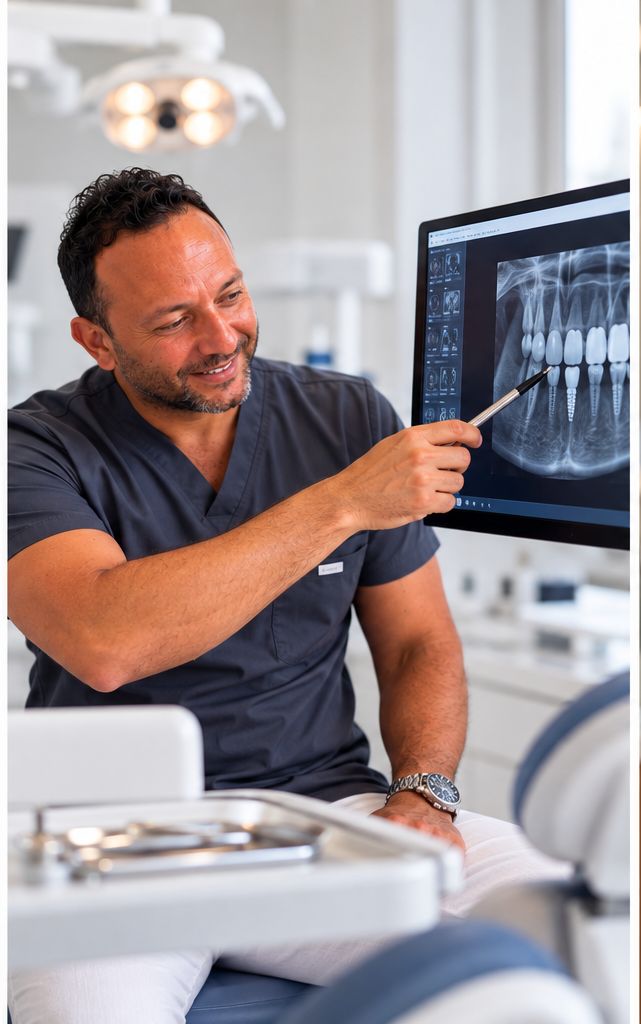
Digital technology for precise results
Modern technology lets us plan your treatment step by step in advance and tailor it to your situation:
- Intraoral scanner instead of uncomfortable impression paste – no gagging
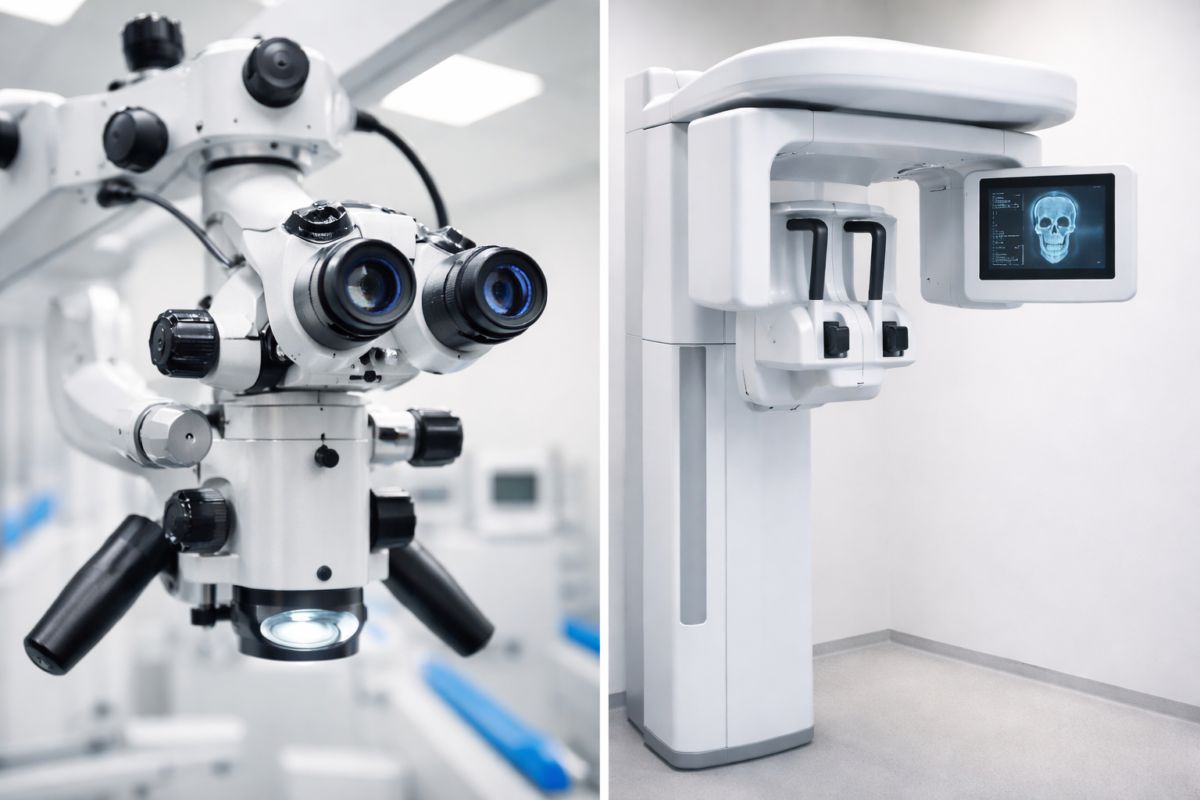
- 3D X-ray (CBCT) showing bone, nerves and neighbouring structures exactly
- Digital implant planning on the computer before the first step
- Guided implant surgery with 3D-printed surgical guides to carry out the plan precisely
When is an implant a good choice?
- Replacing a single missing tooth without grinding down healthy neighbouring teeth
- Several missing teeth – as the base for a fixed bridge
- Toothless jaw – implants give a denture a firm hold
- Preserving the jawbone, which shrinks over time without a tooth root
How treatment works
- Consultation and diagnosis: examination, 3D X-ray and digital scan.
- Planning and cost estimate: we show you the planned position and discuss costs and alternatives.
- Implant placement: a gentle procedure under local anaesthetic using a surgical guide.
- Healing: the implant fuses with the bone. If needed, you receive a temporary restoration in the meantime.
- Final restoration: the crown, bridge or denture is made digitally and fitted.
Your benefits
- No impression paste, more comfort
- High accuracy thanks to digital planning
- Gentle, well-planned procedure
- Long-lasting, natural-looking result
- An individual treatment plan for every patient
Frequently asked questions
Does getting an implant hurt?
The procedure is done under local anaesthetic and is usually painless. Afterwards there may be some swelling or pressure for a few days, which can be managed well with common painkillers.
How long does healing take?
It depends on the bone and the area of the jaw, usually from a few weeks to a few months. We discuss the exact timeline with you after the diagnosis.
Does health insurance pay for an implant?
German statutory health insurance usually does not cover the implant itself but contributes a fixed subsidy towards the crown or denture on top. You receive a transparent cost plan before we start; payment in instalments is possible.
Do I have enough bone for an implant?
The 3D X-ray (CBCT) shows this. If there is not enough bone, we discuss bone grafting options with you.
More treatments
Oral surgery
Some teeth cannot simply be pulled: wisdom teeth stuck in the jaw, teeth that never erupted, or broken teeth with curved roots.
Learn more →Root canal treatment
If the nerve of a tooth is inflamed or has died, root canal treatment (endodontics) can often save the tooth for the long term.
Learn more →Dentures & crowns
When teeth are missing or badly damaged, dentures restore chewing, speech and appearance.
Learn more →Clear aligners
Slightly crooked teeth, small gaps or crowding can often be corrected in adults without fixed braces – using transparent, removable plastic splints called aligners.
Learn more →Prophylaxis & gum care
Treating is good, preventing is better.
Learn more →Children's dentistry
We want to introduce children to dental care – and treatment when needed – in a child-friendly way.
Learn more →Fillings & splints
We treat smaller defects gently and inconspicuously.
Learn more →Make an appointment – online, by phone or by message
Book your appointment around the clock via Doctolib, or call us during opening hours. In our practice we speak German, English, French, Arabic, Kurdish, Croatian and Bosnian.